
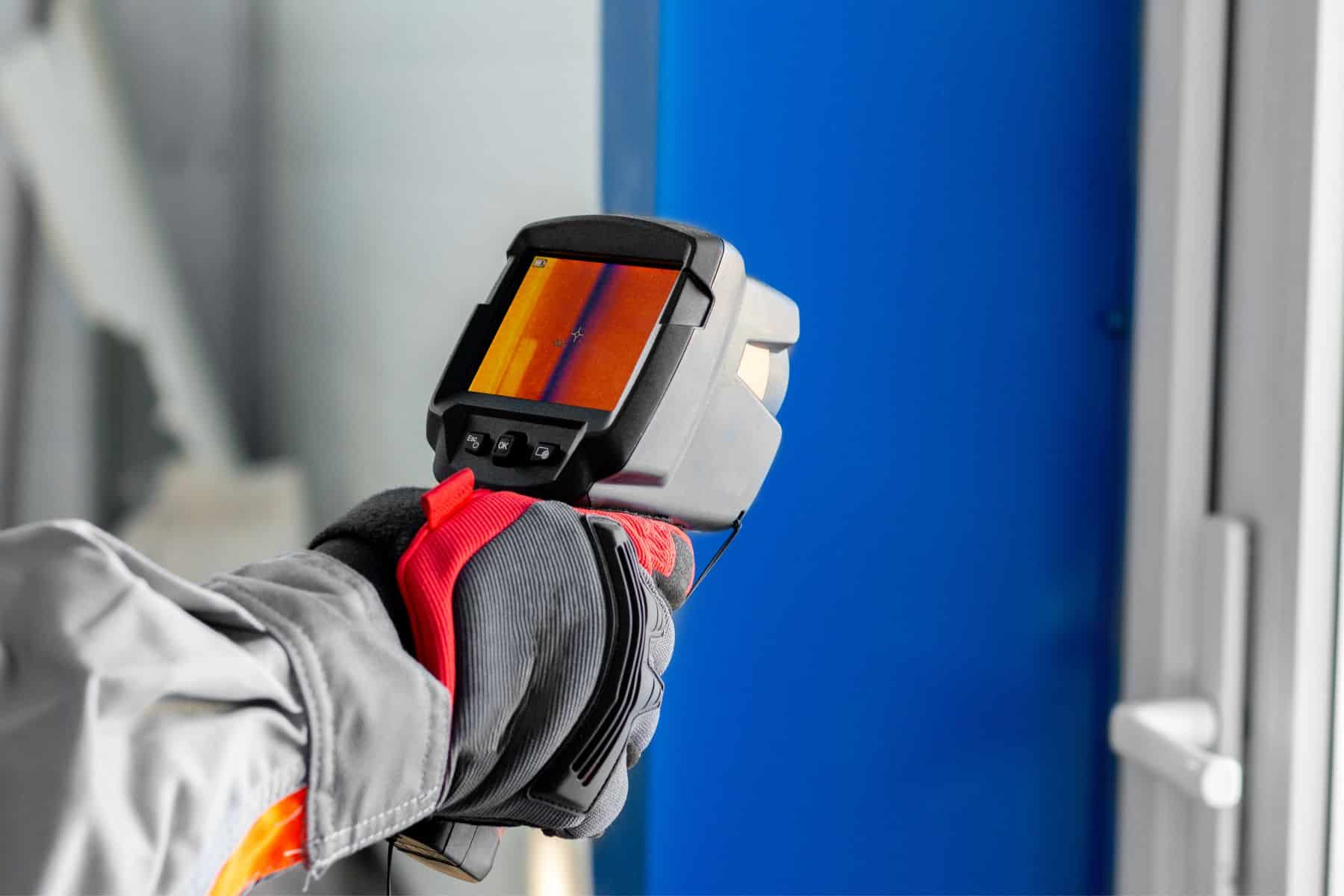
How Infrared Thermography Can Detect Faults and Prevent System Failures
- airtecs-admin
- September 18, 2025
- 1 Comment
Testing and commissioning ensures that every HVAC system is installed correctly, calibrated properly, and performing at its maximum efficiency. This blog will explain how proper T&C prevents expensive breakdowns, improves indoor air quality, reduces energy consumption, and guarantees that the building operates as designed. Readers will understand why skipping the T&C process leads to long-term issues and how Airtecs Pro helps deliver safe, reliable, and efficient system performance.
What is Infrared Thermography?
Infrared thermography is a non-contact diagnostic technique that uses thermal imaging cameras to detect heat variations on the surface of equipment.
Every object emits infrared radiation based on its temperature. Thermal cameras capture this radiation and convert it into visual images known as thermograms, which display temperature differences across equipment components.
These temperature variations help technicians identify hidden faults that are not visible to the naked eye.
Common Faults Detected Using Infrared Thermography
Infrared thermography can identify a wide range of electrical and mechanical issues, including:
-
Loose electrical connections
-
Overloaded circuits
-
Faulty breakers or switches
-
Overheating motors and pumps
-
Insulation failures
-
Air leakage in HVAC systems
-
Bearing friction in rotating equipment
Early detection of these issues allows maintenance teams to address them before they escalate into major failures.
Applications of Infrared Thermography
Infrared thermography is widely used across various industries and building systems, including:
-
Electrical panels and switchgear inspections
-
HVAC system diagnostics
-
Mechanical equipment monitoring
-
Industrial machinery maintenance
-
Building envelope inspections
-
Energy efficiency assessments
Its versatility makes it a valuable tool in predictive maintenance programs.
Why Regular Thermal Inspections Matter
Thermal inspections should be conducted regularly to monitor system performance and detect developing faults. Periodic thermographic surveys help maintain equipment reliability, extend asset lifespan, and ensure efficient system operation.
Organizations that implement routine infrared inspections can significantly reduce operational risks and improve maintenance planning.
Conclusion
Infrared thermography is a powerful preventive maintenance tool that helps detect hidden faults before they lead to system failures. By identifying abnormal heat patterns in electrical and mechanical equipment, it enables organizations to address issues early, reduce downtime, and enhance overall system reliability.
Incorporating infrared thermography into regular maintenance strategies ensures safer operations, improved efficiency, and long-term equipment performance.
1 Comment
A WordPress Commenter
September 18, 2025Hi, this is a comment.
To get started with moderating, editing, and deleting comments, please visit the Comments screen in the dashboard.
Commenter avatars come from Gravatar.